
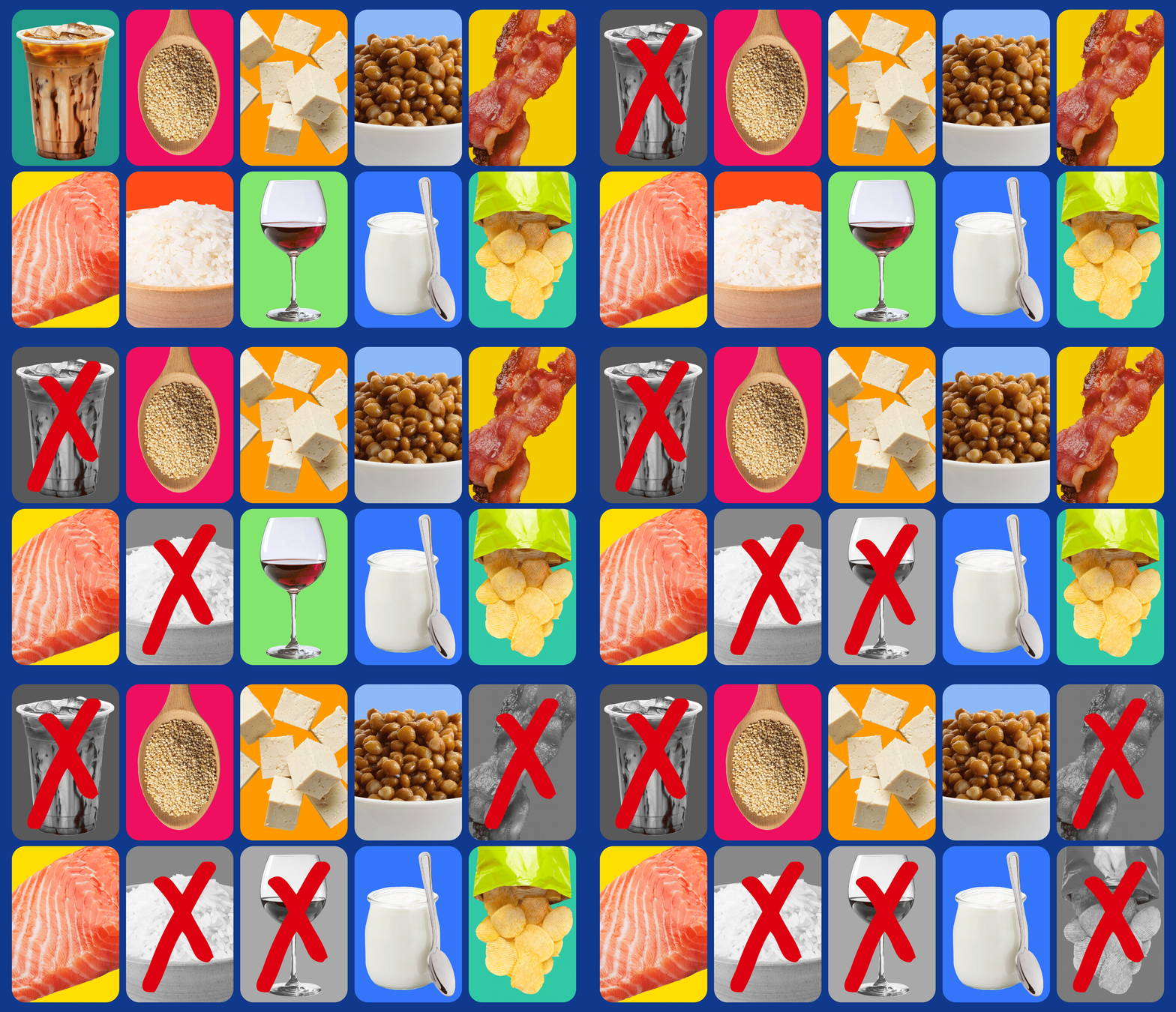
Did you make New Year’s resolutions for 2026? If so, there’s a good chance that "lose weight" and "eat better" are on your list. But eating healthfully can be a challenge, especially when there’s so much conflicting advice about it. And as a woman in her 40s or 50s, your nutritional needs are in flux.
That’s the bad news. The good news is that by focusing on some critical "core" foods in your diet and eliminating less-healthy options (looking at you, venti mocha drinks!), you can shed pounds, have more energy and help protect your health. Here’s a closer look at five foods you should eat more of — and five foods to avoid — for a healthier, happier you in 2026 and beyond.
Food to Eat More of:
Greek Yogurt
“Prioritizing bone health is essential in your 40s and 50s,” says Amy Bragagnini, spokesperson for the Academy of Nutrition and Dietetics and a clinical oncology dietitian at Trinity Health Lacks Cancer Center in Grand Rapids, Michigan. “Greek yogurt is a rich source of vitamin D and calcium. It also contains probiotics and is healthy for your digestive system and your gut.” It also contains more protein than regular yogurt, which makes it a go-to food.
Quinoa
Quinoa (pronounced keen-wah) is a whole grain that is high in protein and fiber; it’s also simple to cook and prepare at home. “I love quinoa for so many reasons,” says Bragagnini. “The fiber is excellent for satiety, which means it keeps you full longer. It also helps keep your gut moving and helps control your blood sugar and contains B vitamins for your metabolism.”
Salmon
“Midlife women need to be concerned about heart health,” says Bragagnini. Foods that are high in omega-3 fatty acids, like salmon, help support your cardiovascular health both now and as you grow older. (Bonus: a three-ounce serving of salmon also has about 17 grams of high-quality protein.)
Lentils
Speaking of protein, you needn’t rely on animal sources for this essential macronutrient. Lentils are another go-to food for midlife women. Lentils are loaded with protein; just a half-cup contains about 12 grams, which you need to retain lean muscle and offset lean muscle loss as you get older. They’re also high in fiber, which helps keep you feeling full.
Tofu
Rounding out the top five is tofu. Tofu is another excellent source of protein and fiber; it can also help reduce hot flashes due to its phytoestrogens (plant compounds that mimic the effect of estrogen), says Bragagnini.